Meeting travel: how companies can reduce costs and CO₂ without sacrificing productivity
Discover how data-driven meeting travel planning helps global teams cut costs and emissions while keeping collaboration strong.
By Convien teamPublished 1 min read

When most companies think about business travel, they focus on logistics, flights, hotels, and expenses. But there’s a deeper truth: meeting travel is one of the biggest hidden drivers of corporate costs and emissions. And it has a direct impact on team productivity.
The hidden cost of meeting travel
Global teams often underestimate the true price of travel. It’s not just the ticket or hotel invoice, it’s the hours of productivity lost in transit, the jet lag, and the CO₂ footprint that goes straight into sustainability reporting.
According to industry studies, business travel is responsible for a significant portion of a company’s Scope 3 emissions. At the same time, CFOs know that travel is often one of the top five expense categories. Yet most meeting locations are still chosen based on habit, convenience, or gut feeling.
Why companies need smarter travel decisions
The problem is not the meeting itself, it’s how and where the meeting takes place. A team flying to the wrong city can cost noticeably more and emit more than a data-driven alternative.
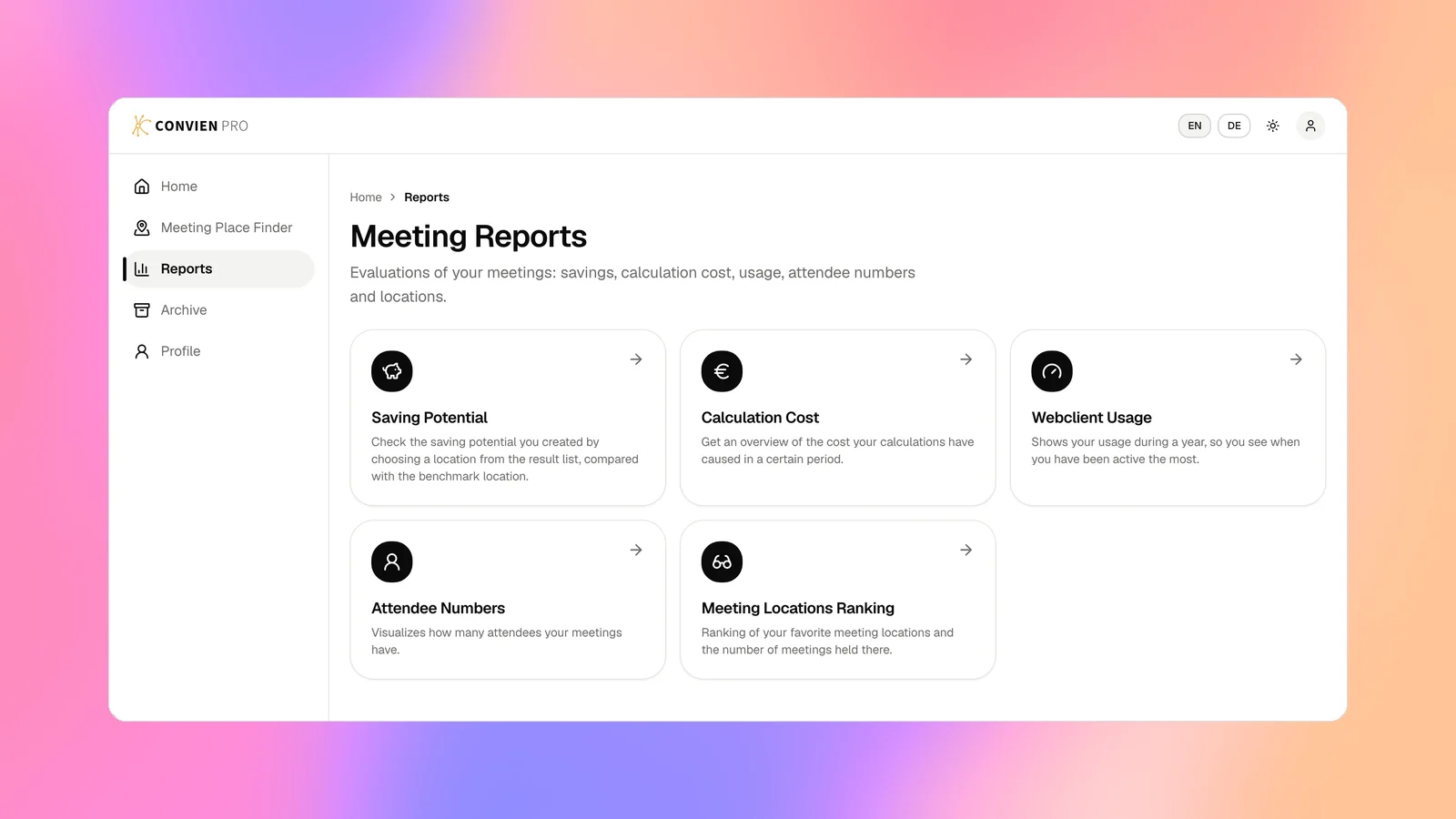
That’s where technology like Convien comes in. By analyzing travel routes, flight emissions, costs, and time, Convien calculates the optimal meeting city for all participants. The result:
Up to 42% lower CO₂ emissions
Significant savings in travel budgets
Better productivity because travel time is minimized
Travel smarter, not less
The goal isn’t to cancel meetings. In-person collaboration remains critical for innovation, trust, and alignment. But with smart planning, companies can reduce unnecessary travel impact while keeping their teams connected.
Conclusion
Meeting travel doesn’t have to be a financial and environmental burden. By choosing destinations based on data, companies can make every trip count, for people, budgets, and the planet.
Share this article
Read us first in Google Search.